







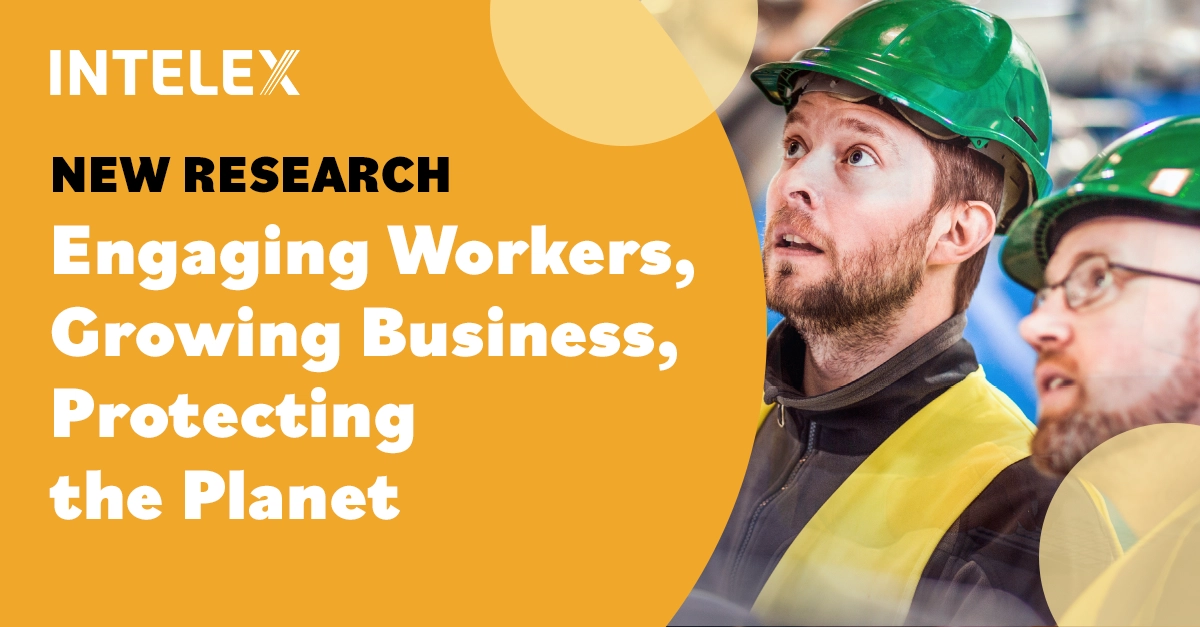


In this episode of The Safety Brief, hosts Trevor Bronson and Scott Gaddis tackle one of today’s hottest workplace conversations: What does it really mean to manage Gen Z?
From their always-on relationship with technology to their bold expectations around mental health, inclusivity, and purpose-driven work, Gen Z is reshaping how organizations think about safety, leadership, and culture. Trevor and Scott dig into the generational contrasts: loyalty vs. adventure, compliance vs. collaboration and ask the tough questions about how leaders can adapt without losing sight of fundamentals.
[music] Hey everybody, welcome to the safety brief by intellects, a podcast where we’ll talk about the hottest safety
topics and offer perspectives all things EHS. Hopefully you’ll leave this podcast with something to think about and maybe
even something to apply. My name is Trevor Bronson. I’m the director of portfolio strategy here at Alex. I’m
joined by my trusty co-host and sidekick, Scott Gatis, VP of our EHS practice and esteemed best-selling
author. Scott, they brought us back for a second episode. Can you believe it? I I I didn’t know we would have an
episode two. I thought it was like a one one time thing. They must not have listened to the first
one. They must have agreed with this one before they before they did anything there. Well, here we are anyway. Uh today’s
topic is an interesting one. Gen Z in the workforce. Something on a lot of people’s minds and and how to manage
this uh quasi unique group of people. Did I sign up for this one? I can’t
imagine. Nate, I think you were volunttoled. So, you’re gonna be stuck with this for the next uh next 25
minutes here. All right. Jenzie in the workforce. Who is Jenzie? You know, I I speak maybe maybe we we
got this assignment because I do speak about this quite a lot at at conferences and I would say that if there’s an
abstract that goes out, this is the one that’s accepted and the room is filled. So I think a lot of folks just like me
my age are kind of looking at this new bunch of people coming into the workforce and they are going oh my
goodness you know what have we done when you define it right Gen Z is like that people group from let’s see uh 13 to 28.
So we have at least a set of them in in the workplace now. So wow that’s that’s
pretty amazing when you think about it. Yeah. doing the research for this the oldest Gen Z people being 28 I guess
surprise you know I think of them as 20s kind of entering the workforce which a bunch are that’s the middle right but
that is an interesting takeaway and right so Gen Z is known for I guess a
bunch of things maybe uh when you think about how they work wanting some deeper
motivations beyond the the classic ones of just go go clock in clock out get paid leave um they want to be coached a
certain type of way they expect a certain type of from their um employer [clears throat]
uh in terms of how they’re treated. What what do you think, you know, what have you seen or what do you talk about in your presentations about that?
Yeah. Well, when when I kind of look at this group, right, Gen Z, they just grew
up in this climate of technology, right? A tremendous amount of technology advancement. Uh they’re always on social
media, right? I I I I I tell folks when I talk about this is that they are the
first generation that was born with a smart device in their hands, you know, so they they’ve never known a day where
they didn’t have technology and they’re so aware, you know, that that’s the thing that that scares me a bit about
this generation, but I’m also kind of looking at that going, boy, I’m really glad because they are up to date on on
things like global issues, climate change, uh if there’s a conflict in the in the world, they know about it 30
minutes after that happens. Maybe even a few, you know, a few seconds. But Trevor, you know, when I think about it,
you’re much closer to Gen Z than I am. I mean, what are you seeing? Is there any
difference between you you’re a millennial, right, than and this this
bunch? Yeah. No, that’s a that’s a a good point. I mean, I think about you mentioned they going up online. I
remember when I got my first cell phone. I was uh 13 or 14 and it had a it had a pull out antenna. still, you know, I
think if you handed a phone like that to uh to someone in the Gen Z crowd, especially someone on the the younger
side of it, they may not actually know the the function or importance or how how to use that. Um, so, you know, not
growing up with that and kind of leaning into technology as they got a little older and entered the professional world is certainly something different from
from what they’ve experienced. And yeah, I mean I think they like like we said in the beginning from my perspective, they
just have a slightly different expectation and style style of working.
Um the the motivations that they seek for going out and doing a good job need to kind of come internally in a sense
and not just be dictated to them and do this because of this and don’t don’t really question it, right? They’re going
to look for some more important reasoning to go out there and accomplish a task or or be be part of something bigger or whatever they do. it needs to
be meaningful or you know ideally should be meaningful to them and of course this is not a blanket statement per se
everyone’s different but in broad strokes um so you know compared to compared to someone who is a millennial
like myself I I think you know in the era when when I entered the workforce
and we’re talking kind of like the financial crisis and making sure you go out and have a have a good job and kind
of climbing that ladder that’s just not always the most important thing, most important thing to this group, it’s
going out and contributing sometimes or doing what they kind of want to do or feel comfortable doing or are motivated
by. So, you got to as a boss, as a leader, you know, whether we’re talking
EHS or otherwise, make sure this group has kind of a a mission that they’re working to achieve that they believe in
achieving. And it seems like that’s maybe the way you get the most out of out of this group of people. Now, we
zoom out and say that’s probably how you get the most out of anyone. people generally work harder for things they truly believe in.
But maybe there’s more of an appetite for a certain group of people to just work hard no matter what, even without
that. Then you have folks in the Gen Z um generation that only work hard with
that, like need need that to get the most out of them. So I I think that’s kind of a key difference I see between
people from my generation and people a little bit younger than myself. Do you do you think are you irritated by
this new people group? I mean, I I remember when millennials came into the
workplace, right? And I was I was in leadership. I was younger, right? But in leadership and I literally, you know,
started every day thinking, well, millennials are just going to ruin everything that I put together, right?
And and I I have to think we didn’t, right? No. No. And you didn’t. I think I think that was the the plausible uh answer
that I came up with. Well, that didn’t happen, right? But millennials kind of pushed me in a certain way that I I I
was somewhat uncomfortable at the time, you know, but over time I kind of adapted and adopted some of those those
really great great ideas, right? So I think every generation kind of looks at the at the one that that uh follows and
says, “Well, that’s that’s it. That’s the end of of society of society.” And you know, I I I will say that, you know,
I I do work with Gen Z’s. I mean, you know, we both know that intellects is full of
Yeah. Yeah. We are that company. And and there’s these different assumptions, right? And one of the things that I I
the first thing I noticed is that when I went to work, you know, gosh, back in
1989, I just never envisioned even leaving where I worked. You know, I just thought
that I would stay there for my entire career. And I never thought too much about it. I thought about myself being
loyal to the company that I was working for, right? And so some of these things
that I thought were quote being a good employee or being a good worker that
didn’t even seem to resonate right with with with Gen Z’s because I I see them coming into, you know, companies like
ours and maybe staying for a bit and then going to another adventure. You know, it’s not because they’re dissatisfied. I think it’s just because
they look right for adventure and uh and so I I see that as one of the
differences right off the bat, you know, when I think about this brunch. That’s a great point. Yeah. A little bit a little bit less attached in a way.
Kind of living for themselves, right? Doing doing what what motivates them and
makes them happy. And that that’s a like a noble endeavor, you know? That’s that’s a really really great thing. It’s cool that they feel empowered to to go
to do that and live that kind of lifestyle, especially professionally. Um but yeah, I mean, you know, to your
original question there, like if I found challenges, it’s not I wouldn’t say that. Um the every person is unique, you
know, no matter what generation they come from. So you classically have some people that just seem to go out there and really want to grind and go do
something. And those kinds of people can be easy to manage and work with and work alongside. Other people may just be
there for the job and that’s that. So if you want to get them to the next level, you have to find something kind of else
to to push them there. Or sometimes that’s really all all they want to do.
And that’s okay, too. You just have to find the way to kind of work within the bounds of of that with the broader team,
right? And of course, if this is ultimately resulting in a in a poor um a
poor work ethic or poor output, that’s a that’s a whole another thing. And you need to, you know, manage your team appropriately. And I think we’re all
professionals here. like that’s that’s the reality of of business in general and that so be it. But you just want to
make sure that you are more intentional about what makes each individual really
tick. And I yeah, it just takes a bit of a I feel like it takes a bit of deeper assessment analysis, maybe deeper
relationships um with the with the Gen Z people to and that doesn’t mean you need
to like have a deep personal relationship. That’s not what I mean by that. That just means you need to make sure that you have an understanding of
what what does a good manager for this person look like? Because a a good manager for this other person might be different than that. And you can’t just
assume that everyone’s going to respond to the same thing. No, I I think I think what you just said, right, created this I’m always
mapping all of these things in my head. You know, how how this person ticks, right, is is really really an important
uh idea, right? And and how we talk about it. Because Gen Z, you know,
safety at work for me, if I look back in my career, was making sure everything was physically guarded, right? Making
sure that we had physical protections uh that protected you from reaching into something, right? Well, protection for
Gen Z, it it just goes far far, you know, further than that or above that
because they look at at at themselves in this holistic whole person well-being,
you know, type of of view and and and I think it’s it when when I think about
this group, right, focusing on well-being is not a bad thing. You know, I think things like mental health and
emotional health and physical health, I think those are really really important things and and it may not have
been things that I focused on for the workforce that I was was in in charge of protecting, but I’m certainly glad that
Gen Z is pushing that because mental health it it does matter, right? Emotional health, it matters because
everything adds up. and and uh for me when I think about those kind of two or
three things it still can result in in loss in the workplace. So, I I love that
idea that this this people group, right, is is moving beyond just physical
protection. And and uh the other thing that you said, Trevor, that I think is real important is that, you know, this
idea of purpose- driven work. You know, they want to to see some type of alignment between personal values and
and how the company practices their work. And and that’s why I think uh many
times we see this group leaving or or going you know to different roles is
they’re looking right for that organization that meets their personal values. And again I I really kind of
look at that and say that’s a good thing right they just want a strong focus on
ethics and and social responsibility and things like sustainability. Those were not even on the radar right when I
started my work. So, so I kind of I kind of like those ideas, right, that that are becoming very apparent and they’re
kind of bubbling up to the surface. So, yeah. No, I mean, totally. Going back to
your earlier point there, like if you think about, you know, if you say Gen Z as a whole is more, you know, in touch with themselves, let’s say, it’s just
another function of risk, right? Our jobs as EHS professionals are to make sure people don’t get hurt. You know,
priority number one kind of the the sentence ends there. People getting hurt as you mentioned is a function of a
machine guard in a in a properly locked out you know uh stamping machine and things of that all these kind of
physical controls you can put in place or administrative controls or engineering controls but
accidents happen so often when people are complacent or rushing or there’s that human factor of you know humans are
the biggest variable in all of this and making sure that someone is present at
work and feeling good and ready to do the job well and and safe is is an
enormous risk factor. It’s it’s almost in a sense like silly. It wasn’t focused on before as we just trying to engineer
things out sometimes, but to to see this not just as oh now we have to do wellness and and yeah, you know, see the
kind of holistic nature of of safety. That’s a that’s if we kind of strip it
to the bare bones, that’s just a better way to do safety. You’re just trying to figure out a way to account for more risk that comes from, you know, between
the ears. So it’s it’s just better safety when I when I think about it like that.
Yeah. I I don’t I don’t disagree with that at all. I I think that when I look
at how I like program even before this new generation entered right even before
millennials entered the workplace I was looking at some of the signs of what
success really was about right when I was leading program and I I identified a
couple of things is that I really needed to remove myself from being a commander
right being in control to being the chief collaborator right to being a chief mentor because I really did link
it together with the more I can get participation and getting people to actually partner with me, the better
chance that I had, you know, for success. So, when I think about this group, that’s exactly what they’re
asking. And really, they’re demanding that it’s done in in the workplace. So the idea that that uh inclusion is a
really really important idea because it gives right us the the diverse backgrounds to consider how a safety
program should work. And and I I think that when we think about inclusivity,
right, and and the identities and the backgrounds of just different people and we have different, you know, people now,
more different people in the workplace than we’ve ever had. So including them, bringing them to the table, I think it
probably reflects well I know I I know that it reflects a better safety program. I think the other thing that we
I always kind of worry about is this whole idea of bias is that Gen Z is is
this group again that demands that that organizations proactively eliminate
bias. So we should be designing a program that includes and I I’ll give
you kind of a story about this is that when I started you had two or three different pair of of safety glasses that
you could wear. You had one size of a of a uh a protective garment to wear.
Gloves came in just very few sizes. And I I I tell you that story because I had males and I had females in the work
environment. And you can bet what most manufacturers were designing their equipment to fit it was a bunch of men,
right? So when I had, you know, female employees that that uh approached me and says, “Who bought these gloves or who
bought these glasses?” Well, they they were saying they these don’t fit me, right? Yeah. And and that that that
really did start to give me an idea that there are some biases, right? And safety. And until we kind of bring
everyone together and fit the environment for the person that we have, we’re we’re going to lose or we’re going
to jeopardize how good safety could be. But I I think it’s further than that, right? That was just a simple story.
But, you know, are our safety protocols, for example, in the the languages that they for the audience that they have to
to reach. And even again, when I think about it, it’s like gosh, I used to
write my my safety policies, my procedures in English. and I just wish that you had a good idea of what I was
talking about. I didn’t go to the to the next degree of saying, “Well, I need to make sure these are in Spanish or French.” I just expected, you know, that
person on the other end to figure it out. Uh, so I wasn’t being very fair, right? I wasn’t really teaching
accessibility at the time, but I quickly pivoted, right, to make sure we did not have those type of biases in in the
workplace. So I think this this Gen Z group right they’re kind of pushing that is that you know they they’ve learned
about people and about all these cultures around them from a very early age. So they’ve identified and things
like diversity and the importance of being me right in a unique way brings
about I think a lot of positive momentum you know in in the workplace. So I’m all about it. I I think it’s just absolutely
the way that if we want to truly get the culture that we want, these are really valid points that I think this this
people group is bringing to the workplace. You know, you and I do a lot of webinars
and podcasts and speaking engagements. Um, you know, they they that’s probably why they chose us for this. That and our
their devilish good looks, but probably mostly the experience. My hair. My hair. Um, exactly. And uh one thing we’re
always talking about on those on those whatever the the medium in which we’re giving a message or a talk is culture.
Like that always comes up. Culture. How do you get better culture? How does technology allow you to get better culture? How does certain management styles get you a better safety culture?
And you know when I think about someone that doesn’t adopt safety culture, I think about this this grizzled old
construction worker or something and you go out and say, “Yeah, where where’s your hard hat? Wear your safety glasses. Where your gloves?” and they say, you
know, take take these gloves and shove them right up your ass. Like, I’m not going to wear them. I’ve never worn them. Stop telling me to wear them. And
that’s hard. That’s hard to get that person to buy into safety culture because of a variety of reasons. But
then we talk about Gen Z, being a bit more aware, uh maybe more motivated by
an employer, a company like doing good out there and taking care of them and caring at them as a person. Does that
actually make for an easier job for the safety professional to get that buy into safety culture when people kind of
understand the the motivation and and appreciate the motivation behind really wanting them to go home safe at the end
of the day versus someone that yeah tells you they’ve been doing this job the same way for 50 years and you’re not
going to come in here and tell them that they need to do it this way because it’s better for their back. Yeah. I I think this is really where
coaching and mentoring really come into play because when I look at what Gen Z
is demanding, you know, things we’ve already talked about like mental well-being is really important. Uh being
supportive is very important. Stress management really important, right?
Stigma in the workplace very very important. The difference is is that you know when I look at my group, right? And
I’m a I’m a I guess a late baby boomer, right? I’m I’m just right there straddling the line between Gen X and
and baby boomers. But all those things affected me. I just didn’t talk about
them, right? I was not bold enough to kind of bring them up and say, “I’m having a mental health issue, right?”
You just didn’t talk about those things. I think the big difference is is that the things that Gen Z is bold enough to
demand, right, are things that other generations wish they had said. So if me
if if I’m leading a facility now, I would use that to my benefit, right? And
say, well, I now I have a license to have a better discussion with these other generations that have gone through
these things but would not say them, right? And and I think that that that connection is going to be quite easy. I
think you’re always going to have that grizzled construction worker that won’t talk to you, right? But giving this
license right through communication is uh is really a powerful tool and I think it is led from from Gen Z. I think when
when I look at it and Trevor we talk technology quite a lot but my whole essence in at intellects is to try how
do we use technology in a way that connects people that engages people and
many times I call it birectional right data engagements where where you’re giving me a piece of data and then I’m
communicating through data back to you or maybe it’s a bulletin to share information but that whole approach that
I think about is that how How do we turn technology into not just a a data
collection platform but a an engagement platform where you learn right from the
information that that you’re collecting where we can give you feedback where we can ask you for an opinion. We we think
about that you know technically at at intellects but when I think about this people group it’s some of the very same
things. It’s like, man, I just I just want to be in a place where I’m heard, right? And just because I’m young does
not mean that I don’t have a very effective, right, opinion on making us better. And that that really requires
collaboration, you know? So, I kind of think about about, you know, some of those ways. And what what about you? I
mean, think about this as employers. And let’s just imagine that we’re leading a construction site or a manufacturing
site. Where do you think we need to go right to meet the expectations of of a
jinzier? Yeah. I mean, you know, a couple expectations. You mentioned that, you know, tech. We’d be remiss to say that
we, you know, we work for a tech company. We spend basically all of our time thinking about how to make better EHS software. So, as leaders, you know,
you want you want these folks to use the technology that you’ve purchased and, you know, paid good money for, and you want to see adoption. So, on that note,
the tech needs to be good. like the the the willingness to tolerate any kind of bad clunky technology that that loads
forever that has poor UI that doesn’t really do the job. It only is is going one direction, right? It’s getting less
and less and that’s Gen Z. We talked in the beginning kind of grew up with technology. So, there’s an expectation
of how that works and you need to meet that expectation or else they’re going to be the first ones to call it what it is is junk, right? So, you don’t you
don’t want that. Um, so when you’re out there shopping around for technology or have a technology specifically in AHS
that you want to adopt, it has to be user friendly enough to keep the most demanding users in a sense. And again,
Gen Z, that’s true for them, but it’s true for my generation. It’s true for your generation, Scott, at this point. We all as as people that exist in the
world that are, you know, operating chat GPT all the time and using all these consumer apps. We know what good and bad
is. So you you you get away with bad. even if it’s you know big important workflow enterprise software you still
get away with bad less and less. So that’s kind of one of the expectations you have to you have to account for. And the other, you know, the other big thing
is how how you interact, how you coach, how how you mentor, how you support, how you provide feedback. Those
communication channels, I think, need to be open and consistent and intentional
um to to get the most out of out of this group in in a safety context specifically, make sure they’re
engaging, participating, promoting the safety program, the EHS program that you want them to to be a part of and succeed
in. Yeah. I mean, I I think that’s kind of what it comes down to. There’s plenty of nuance and detail below that, but in
the safety brief, I think that’s that’s where we can go. Yeah. No, I I don’t disagree. I I think
you’re right. I think that when I think about our technology, right, I think now is a pivotal moment. Uh, and if you’re a
practitioner, right, that’s listening to us, I think you still kind of got to put your your plan together,
right, to make sure you’re assessing the risk in your work environment. So, that’s just foundational to to safety
practice. But, right, you really have to look at it differently is that, you know, things have become faster, they’ve
become busier. technology outside of of what we do at Intellects is is going to
continue to just expose you to new risk. So assessing risk in your workplace has always been, you know, a a denominator
in in how you you practice, but Gen Z is going to really kind of force that is that they really understand risk and now
they just have to understand it in the workplace. I think the other thing is that, you know, the thing that I’ve
learned about this group is that they love to learn, but they only want to learn things that matter to them, right?
And and you almost have to package it up a bit like Tik Tok, you know, or an infographic or something that gets to
the point very very quickly. And and I’ve even noticed if I was teaching, I love being in the classroom and I love
spending hours telling you how to do lockout tagout, right? But the thing that I’ve learned is that Jinzy wants it
concise, right? Can you tell me that in 15 minutes, right? Can you tell me that
three times in 15 minute sessions or whatever that be? So, I think there’s a lot of that. And then, you know, as we
talked even proactive policies is that, you know, there should be more they should be more inclusive, right? But we
want to have a say in what those policies look like, you know? So there’s a lot of things that we we we may be
doing, but we may be doing central to a safety team that needs to be exposed, right? You just need to kind of break
that out and and pull in those groups to be more, you know, diverse and inclusive. That’s such a good point. The
collaboration part of it, you know, and we always I think EHS managers for a long time have have come to realize that
designing policies kind of with the people the policies are for always ends up in a policy that’s going to be more
followed, going to be more adhered to, but also probably going to be better. you know, classically like designing safety for work is done versus work
conceptualized. You know, we we’ve seen graphics and talks around that and they’re going to, this generation specifically is going to be so much more
receptive to doing something in that way so that they know the they know the why. It’s not just an order from above, an
order from corporate. That that sucks. No one likes that, especially not. So, you don’t want to have that. And and the
training point obviously resonates. It’s it’s short-term. It’s quick hitter. It’s something that doesn’t lose their
attention, but gets the point home. And and to your point, you know, you got to this is where kind of managers and leaders earn their money. I need my
people to know this. What’s the best way to get them to know this? For this cohort, it may be the the the big long classic training. For this cohort, it’s
the microlearning video. For this cohort, it’s go around and walk walk around and like learn by doing. And
that’s where you got to identify what drives people. How how do people interact? So knowing that nuance with with generally, you know, the Gen Z
people like to like to learn, like to engage, like to receive information is is going to be key to to being a better
EHS leader. I mean, we last year at Intellects were doing a totally unrelated project to all of this, but
asking asking EHS leaders if they had uh more money in their budget, like what would they spend it on basically to
improve their EHS performance, you know, one thing. And the most overwhelming response was training, just general
training. I wish my people were better trained. Aka, I wish they were better able to go out and be safe without me
having to tell them all the time or guide them or reference whatever. I just want my people to inherently know what
safe work looks like. So that’s where these classically this this training is so important and finding the right ways
to the people. Um yeah, I I was listening to Yeah, I I
think all of that that you said, right, kind of reminds me that feedback is
king, right? feedback is king. So you can ensure these things right are
stepped accordingly to what their purpose actually is. and and uh so I I
listen to you saying you know that u you know technology can be a tool but it’s
also showing it’s also counseling it’s also mentoring right so establishing
these feedback loops is really really important not only for this this people group right but for every people group
but it’s going to matter more you know to to Gen Z’s and then you know one of the things that we are not great at as
practitioners is adapting right is adapting to change and it’s one of the
things I mean I I kind of thought Trevor I’d come in here and I’d spar with you for for 30 minutes or so but that’s not
happening because I think we’re seeing the same thing across the spectrum of of people producers aren’t going to be happy about
that Scott. No, not at all. But you know but it does say you you really do everything we’ve talked about. You got to be agile,
right? You’ve got to utilize feedback and employ the learnings from feedback because it’s not only, you know, I mean,
Gen Z is watching, you know, and and sometimes it’s it’s kind of like when I work with with some of our customers and
say, “Well, how could you have 1500 open auction items, right, in your Kappa
plan, and it always kind of comes down to the the thing, well, we’re going to get around to it or it’s not a priority,
right?” And it’s the same thing that happens is that once, you know, someone sees that we’re not holding up our end
of the bargain, they just stop, right? They just stop reporting. Gen Z is going to be, I think, much more
prone to stop and give you feedback that it’s not working, right? So, we’ve got to adapt, you know, to things that we
see. We’ve got to use feedback in a more effective way. Another thing that we didn’t talk about, but I’m seeing this
is is trying to figure out what the safety climate is. And the only way I I even know you do that is through
assessments and surveys, you know, seeing what perceptions are, seeing how healthy the safety climate is. And I I
tend to pull people into rooms and let’s just talk about that, right? And having open and honest conversations. And
there’s a new term in safety now. We call it psychological safety, right? And and it really is that whole idea of it’s
it’s a safe environment to share me, right? And and we’re not going to blame share. we’re not going to think about
you differently. But it is it’s that whole person idea that we’ve already talked about where says I can be me in
this environment and I don’t have fear of retribution or something happening to me because I share you know honestly. So
I think even that right is is really important. So I I think that you know
Trevor I know we’ve got to be running low on time. So, so maybe what are two
or three things you think about? You know, I know what my thoughts are, but how do we bridge this gap between an old
guy like me that’s leading program, somebody from your generation that’s a millennial all the way over here now to
this Gen Z, new bunch entering the workplace? What What are your ending thoughts on that? I think, you know, it I hate to boil it
down to something so simple, but it’s honest, well-intentioned communication.
Like we’re all we might be from different generations, but we’re all human. And uh all of us want to be heard
in our own way and want to make sure that the people we’re working with are supporting us and enabling us. And while
we may all have preferences and nuance to how we want things delivered and how we want to learn or how we want to be
motivated, all of that can be discovered by communicating no matter no matter
what the person is or how old they are. So you have these people coming into the workforce. Um communication
communication communication will overcome any any difficulty. All the things we covered today maybe can give
you a jump start on you know head start on doing not having to to talk and wait
to set things up and feel like you’re prepared for the incoming uh set of workers. You know like we said there’s
going to be workers that come in and do a great job that do a poor job that leave after leave after a year leave after a month motivated by different
things. So you should be able to have things set for them. But at the end of the day, the more open the whole the
whole thing is to communication, honest feedback, and you know um
genuine improvement, I think the better the better off we’ll all be.
Yeah, I will I’ll add two things um to that and then I’m going to let you close because I’ve talked way too much. Again,
they’re going to change the name of the the podcast safety brief to like safety lecture or safety hour or something.
It’s all right. we’ll work on. I’m always willing to lecture. I am always willing to preach a bit and evangelize the cause. So, a couple of
the things, right, that that kind of pop in my mind as as we kind of start to end this thing is that, you know,
understanding and embracing the differences is a good thing. You know, there’s just these distinct workplace
perspectives that that anyone should know about. You know, there’s all these multiple generations that are in your
workforce. Now I think just kind of embracing that idea of understanding differences is a good thing. Embracing
them is a great thing, right? And and that really kind of forces or it leverages better collaboration and I
think it actually reduces conflict. You I don’t I never mind when somebody disagrees with me, you know, as long as
we can get to a very effective conclusion, you know, to that debate. So I think that’s one thing. And then the
big thing that I would would say is that while we probably need to spend time
with leaders uh because leader leaders need the necessary tools to manage and
motivate all of this multi-generational workforce and if it if there anyone like
me I kind of stayed away from these younger workforces when they when they hit the market because I kind of knew or
I hoped that they would just kind of merge into how I thought that work was actually happening. I’m glad that I recognized that and
pivoted. So now I say, well, just learn, right? Just learn these multi multi-generational parts of the
workforce. And then I I think, you know, you’ll get the cohesion and the effectiveness that you want. And I
absolutely know this, the more we collaborate, the more we partner with with all these different people groups,
the safer our workplaces are. And and again, that’s kind of how I determine my success. Can everybody go home safe?
Right? Did they go home safe? And so that’s that’s kind of how I I kind of think about today and what we’ve talked
about. Yeah, couldn’t agree more. All right, cool. Well, I think that does it for us
on episode two here. Uh I’m pretty tired. I’m feeling a little burnt out, which is my segue into our next podcast,
episode three, where we’ll be talking about the burnout crisis and how to manage that as an EHS practitioner.
Thank you, Scott. I always appreciate it. You uh have a good weekend. All right. All right. Thanks, everyone. See you.
Bye.