








How GRP Pan Rolled Out a Complete Safety Management System in Under a Month
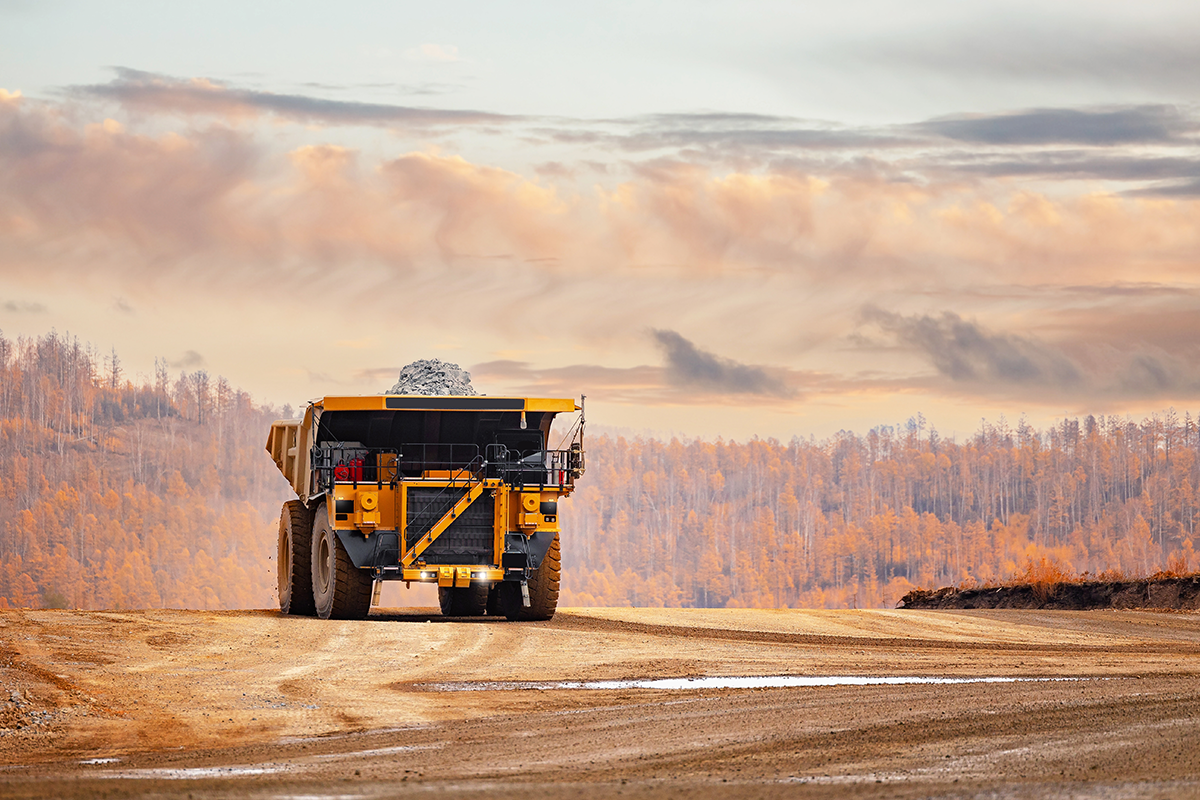
GRP Pan, a gold mining operation owned by Minera Alamos, operates a mine in Central Nevada with approximately 200 employees, including staff and contractors. The company currently runs a surface mine and is preparing to open a second site that will include both surface and underground operations. Ed Spear, Health and Safety Manager, brings 24 years of mining safety experience across three mining organizations.
Impact
- A three-person team replaced hours of manual Excel tracking with real-time dashboards, freeing time for proactive safety work.
- Workers reported more minor incidents after simplified digital forms removed the friction that had suppressed it.
- Corrective actions became trackable and time-bound, creating accountability across the organization.
- Document control became self-service, giving workers access to critical safety documents without routing requests through the health and safety team.
- Employee adoption came without resistance — a result Ed hadn't expected and credited to workers understanding the change was aimed at making the property safer.
Outcome
After switching to Intelex Safety Essentials, GRP Pan's health and safety team found new opportunities to expand. What began as a fix for one site now supports a safety program across several properties. Ed's team is already bringing a second location on board with the same system. Future sites are set up in advance and can be added easily without redoing the process each time.
The daily routine changed as well. Incident reports that used to take a long time to fill out are now submitted quickly. This has led to more minor incidents being reported, which Ed sees as a positive sign of a stronger safety culture. Each corrective action now has a clear owner and deadline. Metrics that once took hours to gather, such as days since the last vehicle incident, injury rates, and trend charts, are now just a few clicks away. The team spends less time on paperwork and more time acting on the information they receive.
The next steps include digital workplace exams to meet the Mine Safety and Health Administration’s (MSHA) per-shift rules, then adding hazard identification and behavioral observations. The system is already set up for these changes.
The Challenge for GRP Pan
Before Intelex Safety Essentials, GRP Pan relied on manual processes. The three-person health and safety team tracked incidents, documented inspections, managed corrective actions, and prepared reports using Excel and various note-taking tools. Ed called this approach effective but time-consuming, taking hours that could have been used for more proactive safety work. There was no central system, no automated workflows, and no simple way to see trends without building charts from scratch.
The manual workload also had a quieter consequence: it discouraged reporting. Long, cumbersome forms created enough friction that workers often skipped documenting minor incidents. GRP Pan had strong safety instincts — lagging indicators showed it was doing the right things — but the processes couldn't keep pace with what needed to be documented. In a mining environment where MSHA requires per-shift workplace exams and ongoing hazard identification, the gap between what needed documenting and what the system could handle was growing.
Ed described the decision to change as driven by a persistent belief that the status quo was never good enough. "I don't think it was ever just a pivotal moment that said, hey, let's do this," he reflected. "It's just one of those things where you're constantly looking for a better way, a safer way." With the operation small but growing, the need for a scalable, consistent system became impossible to ignore.
"The support we've had from both Intelex and Summit has been, hands down, remarkable. Whenever we had a question or hit a snag — even across time zones — the support has been wonderful. That sells itself."
Ed Spear, Health and Safety Manager
"When I saw that Essentials came out, it was tailored more toward smaller operations — people who don't need the entire program. But Essentials had everything I needed, and it wasn't hard for me to make that decision."
Ed Spear, Health and Safety Manager
"Essentials made things really simple. With a lot of help from Intelex and Summit, I was able to get people trained up to where they felt comfortable handling the system — and ultimately, that makes my job easier. If it's easy for them, they're going to report. They're going to do the things they need to do, because we simplified the process."
Ed Spear, Health and Safety Manager
"Lidia from the team at Summit was unbelievable. We started with a plan, broke out our areas, and identified who we wanted to train first — from higher-level users all the way down to frontline supervisors. It was just simplistic. It was great."
Ed Spear, Health and Safety Manager
"Essentials has shown me that it has room for growth — room for bringing multiple areas and multiple divisions exactly where you want them to go. I already had every property built into the system, their roles set up, so that when they come online, I don't think we'll even have a hiccup."
Ed Spear, Health and Safety Manager
How Intelex Helped GRP Pan
GRP Pan's decision to adopt Intelex Safety Essentials was shaped significantly by Ed’s prior experience with the Intelex platform at two previous employers — including time spent in Toronto helping to design and develop a deployment that, to his knowledge, that company is still using today. When Safety Essentials launched as a right-sized option for smaller operations, Ed recognized immediately that it offered what his team needed without the overhead of a larger enterprise package. He described the decision as an easy one.
The rollout progressed faster than expected. With support from Summit EHSQ, GRP Pan mapped out three training levels: senior management, mid-level staff, and frontline supervisors. They started with incident management, the application with the most direct operational relevance. That sequencing paid off. By the time frontline supervisors were brought in, the approval and investigation workflows were already familiar to their superiors. Ed credited the permission structure in Safety Essentials for making it practical to deploy across a workforce with varying levels of technical comfort.
As Ed worked through the platform’s self-guided training modules, he realized Safety Essentials had more scalability than he expected. He moved quickly to capitalize on that, pre-loading a second operation coming online and additional future properties. He configured roles and structures in advance so each new site would be ready without a fresh implementation effort. The team is now integrating workplace exams and the inspection process to meet MSHA’s per-shift requirements digitally and plans to extend the same approach to hazard identification and behavioral observations.